They did name no fewer than a twelvecount of their hero-knights who had left their bones upon its rocky shores over the years after having tested their mettle against its dread warden, ‘til none would any longer go there for fear of its hidden terrors.
Handout 1 of The Varnhold Vanishing, the third book in the Kingmaker adventure path and the first one I ran
Kingmaker is an adventure path for the Pathfinder roleplaying game. Its gimmick of growing a small realm as the adventure progressed made it a fairly iconic campaign for the system and even spawned a video game of the same name.
It was the first roleplaying campaign I played, and two years into it the first I would GM as I took over that seat in the running game.
While that game would end up dissolving without really reaching an ending1, the legend lived on in subsequent groups and there were several attempts to recapture the magic, even in another system. It became less of a specific campaign and more of a type - “we want to play a Kingmaker game” meant the players making decisions for something bigger than themselves, with political quandaries and a wide open map.
I think I became typecast as the GM for such games, and there’s certainly some parallels between it and The Great Pendragon Campaign that I learned to love.
The First Campaign
Obviously a formative time in my roleplaying life, this would also be the first time I started tinkering with homebrew.
The original GM of our Kingmaker campaign was the only one of our fairly large (6 players for most of its extent) who had played an rpg before - and he picked a campaign he was familiar with. He was a good GM, but clearly more interested in playing once we trained us up enough to do.
Since the campaign is sold in separate books2 he passed it off to another player at book 2, and I picked it up at book 33. We both took to homebrewing onto the game - stitching in other products the group wanted4, 3rd party “fixes” and our own ideas. Partially, this was to delight that first GM with something fresh and new - but we were also just both driven to create.
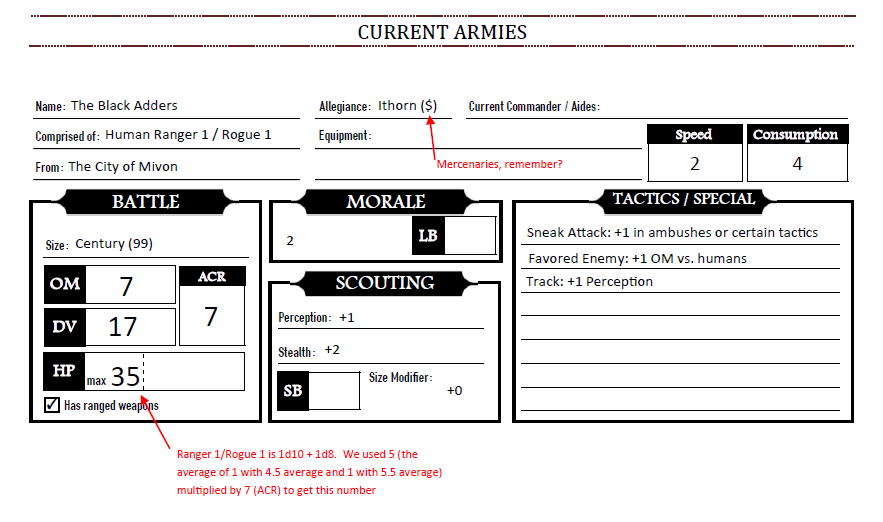
I have little memory of this sheet, but apparently I made it as part of picking up different rules for warfare. I believe it was made in ArcSoft Photo Studio, and you can see the rough edges of the components I cut and pasted from other, more professionally made character sheets.
I don’t think they ever used this system56.
With some players graduating college, the remaining group would split up and be absorbed into other rpg groups.
”East Asian Kingmaker”
The one I was in fell into had already been hearing a lot of stories of this campaign, and so in one lull between campaigns one of the GMs came to me and started asking what advice I’d have for “a Kingmaker campaign”.
This group had been pretty solidly playing D&D Fifth Edition, and he wasn’t looking to change that or bring in any of the kingdom-building rules from Pathfinder. He wanted to make his own.
Also, he wanted to run a Japanese themed setting - eventually expanded into a broader China-and-environs one.
We never had a name for it other than “East Asian Kingmaker” or just “Kingmaker”, even though the plot and setting had little to do with the original.
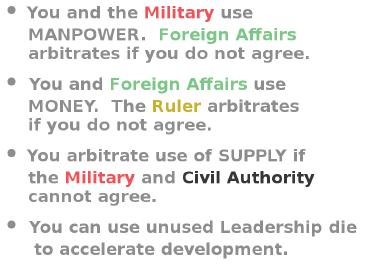
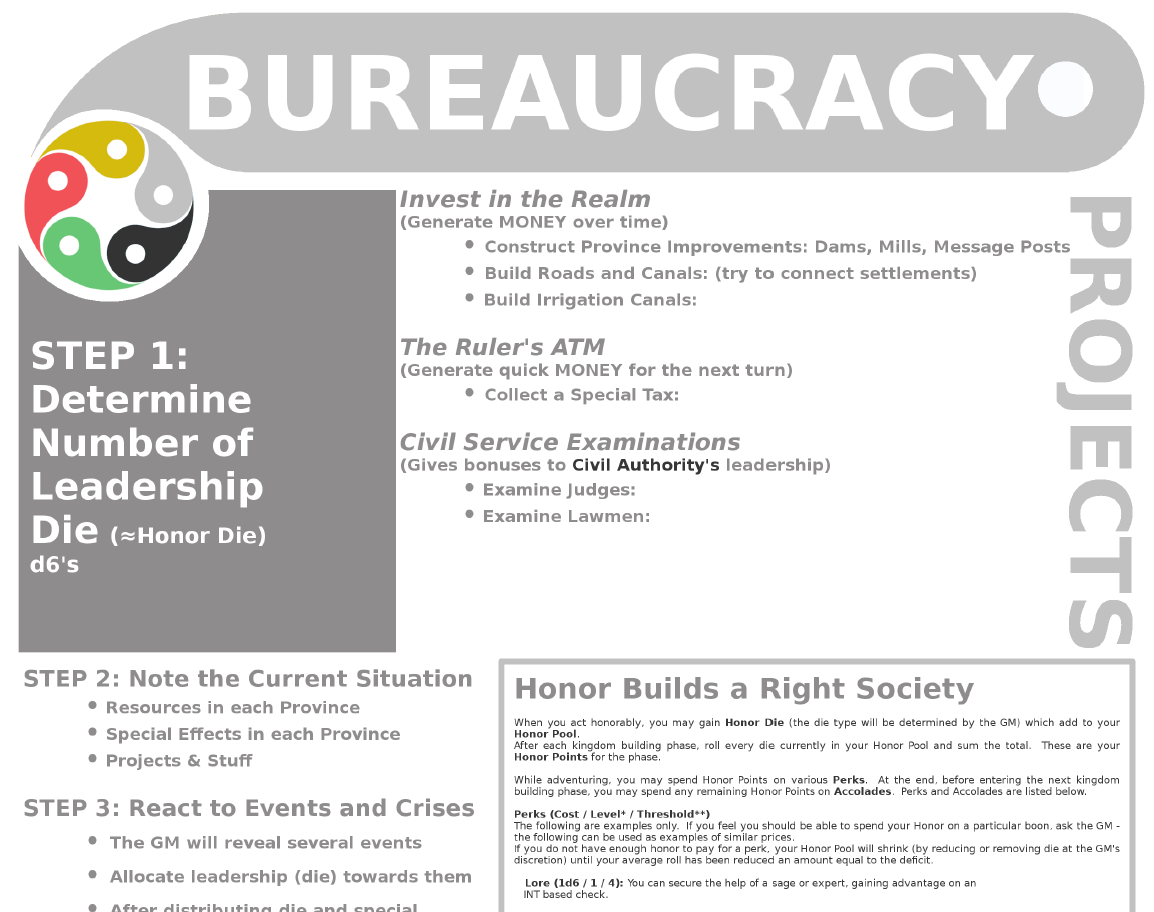 Part7 of the 5-role system we designed8 - built on the five elements with each role complementing and conflicting with others based on the cycle9.
Unfortunately, other player dramas and events ended that campaign pretty quickly and we moved on to other adventures.
Kingmakers with an ‘s’10
aka “French Kingmaker”11 - I had been toying with two settings at this time, splitting the difference between a grittier “Dark Ages” setting and a bright and magical later-Renaissance one.
The group had gotten a hankering for more kingmaker and asked me to run them something in the type - I pitched the French setting and a whole boatload of homebrew rules.
.png)
Many of those rules were for the setting - an awkward attempt to shoehorn the broad D&D party dynamics into swashbuckling stories12 that we ended up often forgetting13. But I also had to figure out how to do the whole king-making bit.
This went through several iterations14 - originally based on Reign as a kind of second system running on the side, but each time evolving into a completely different beast.
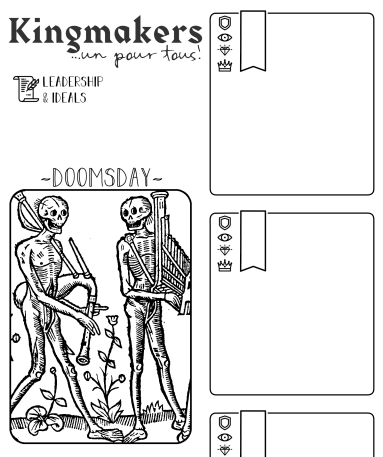
The final system introduced a surprisingly effective trick - Doomsday. The mechanic was almost overly simple - every player has a stack of cards and when you want to gain the benefit of some ally or asset, you draw a card and compare it against the one the GM draws from their stack. Until you can draw a higher card than the GM, you have to keep drawing, forcing you closer to the end of your pile (at which point you have to pay maintenance costs and can lose assets).
It’s one of the world’s simplest card games, distilled down to just the most trivial element and the most complex mechanical aspect of it it is little more than a coin flip but:
- Having a “cost” paradoxically made players use the effect more. They expressed that it made them feel like they had permission to reap the benefits.
- The tactile nature and suspense of waiting for the GM to draw a card added to the excitement15 - you could visibly see people’s hands draw down and feel unlucky when you draw a high card just for the GM to draw an Ace.
- Theoretically, there’s some interesting growing dread or confidence based on which cards have already been drawn. I don’t think we usually were counting cards enough to know what to expect.16
This time, I also had more work to do filling in the characters given I didn’t have two years of groundwork. An unexpectedly hard part of this kind of campaign is that the cast is very constrained. To the characters, it’s a wide open sandbox - focused on a broader area than a “heroes go into a dungeon” kind of campaign. But to the players, you’re invested in a particular area, so there’s a limited number of ways new NPCs and regional powers can show up.
Better hope you get them right the first time1718.
And of course, it is a truth universally acknowledged, that an rpg party in possession of a persistent cast of NPCs is going to start matchmaking.
As a GM I was happy to prop this up for two reasons:
- By putting the option in view of the players, they’re driven to thematic and in-character pressures. Aristocratic politics fits well with the theme of political marriage negotiations - and the swashbuckling soap-operatic vibes love the theme’s messy cousins of arranged marriages, secret affairs, star-crossed lovers, etc.19
- It’s one way to help remind players who all these characters all. The characters may just naturally remember the people they live and breathe around, and only form the mental Tinder model next - but the player needs the model to feel like they have the natural memory.
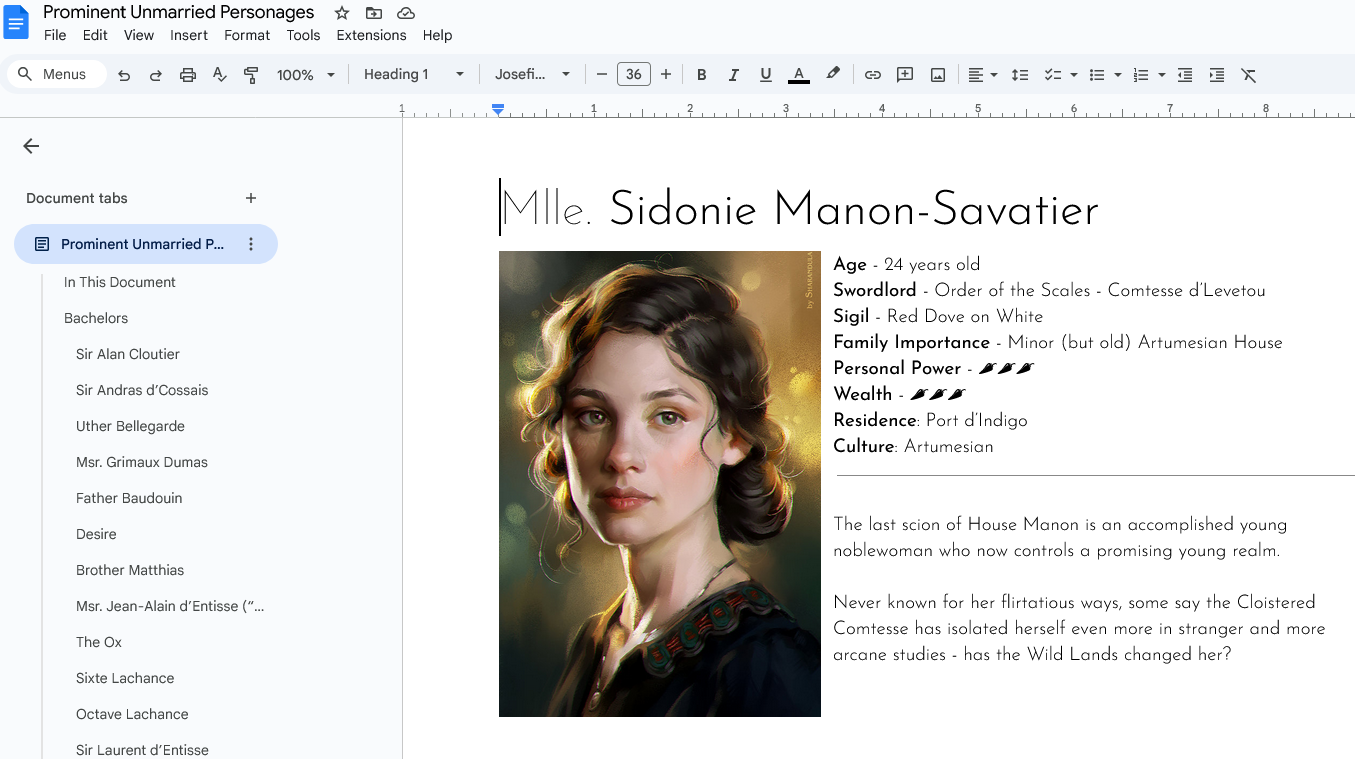
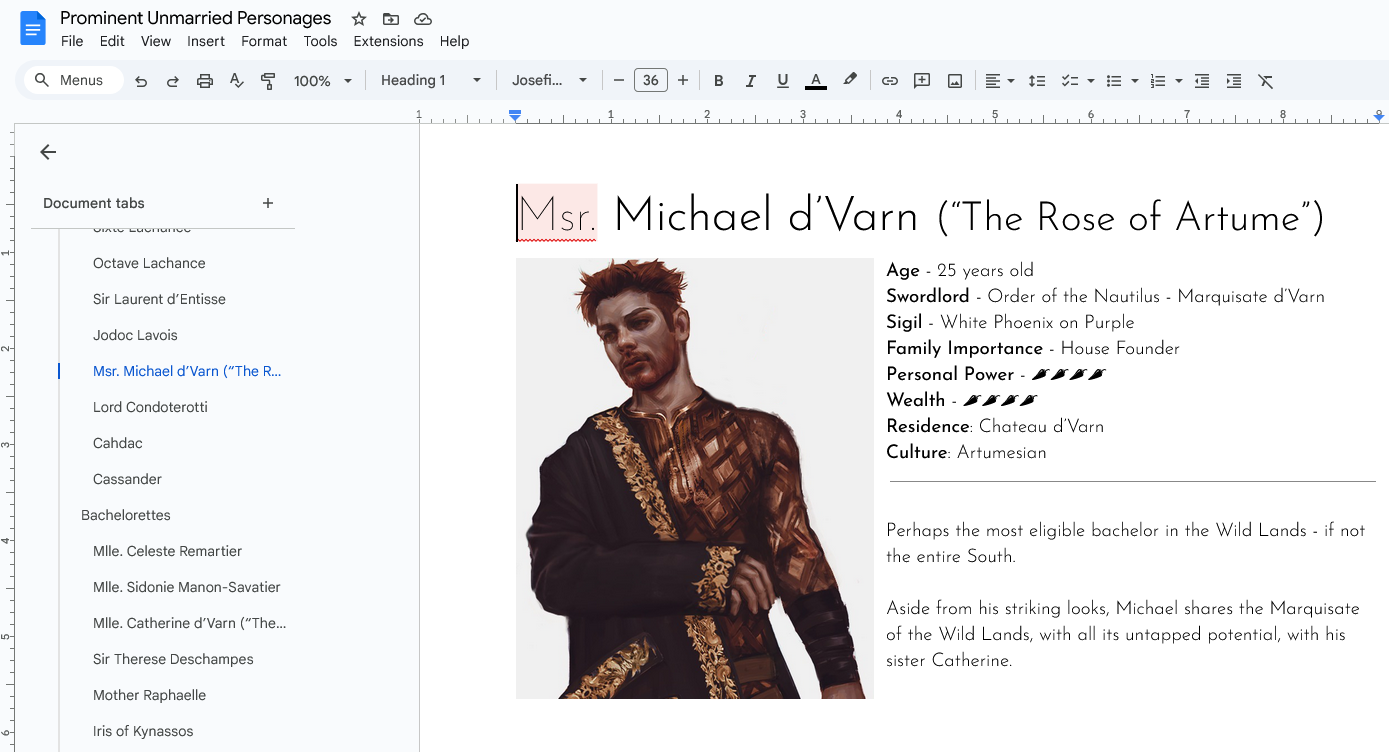
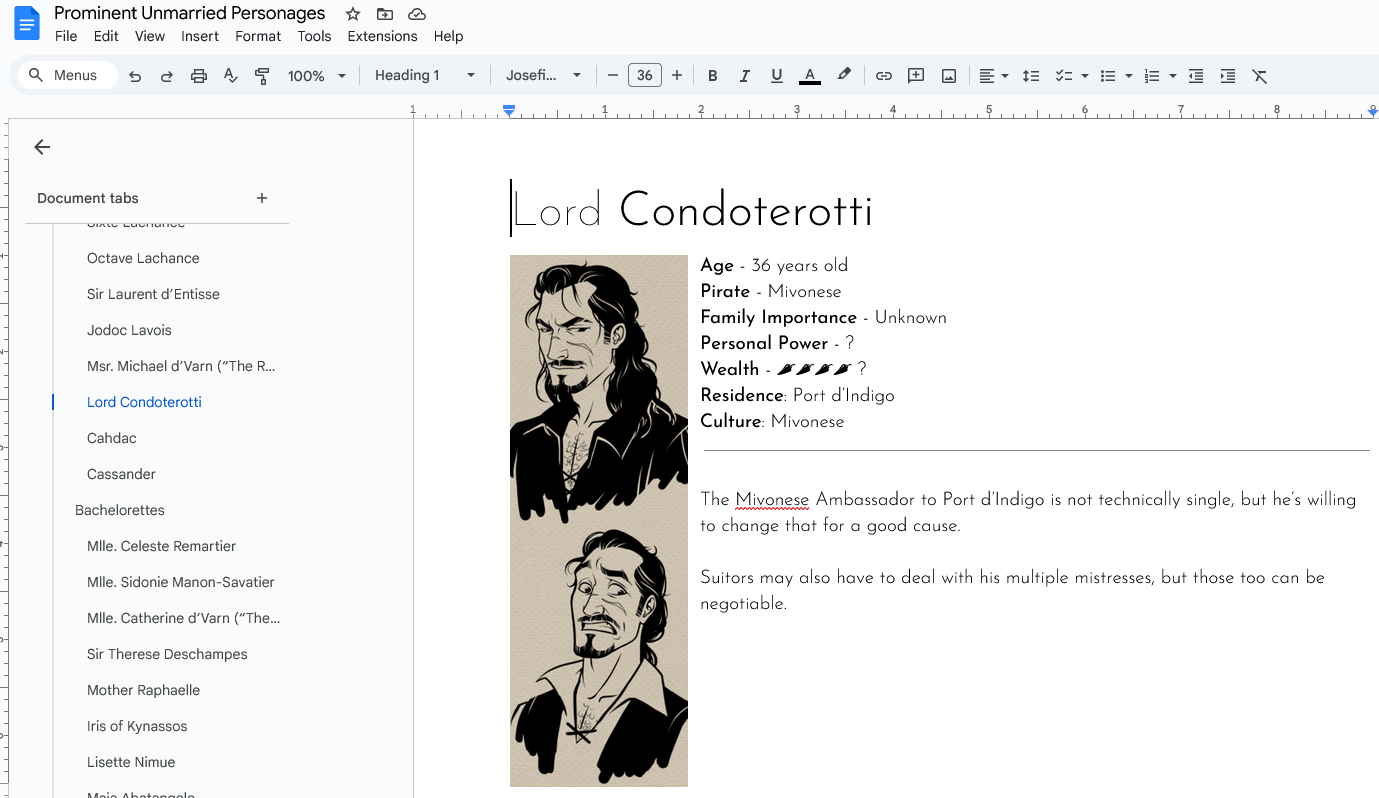
The campaign ran until everyone’s other campaigns and busy schedules drove it to a hiatus in late 2019. Covid then further dispersed the group, and so the last of the Kingmaker campaigns ended.
The Map and the Territory
One important aspect of all three games I haven’t shown is the map.
The original published adventure has a hex map that’s revealed book by book. We had a small printed version floating around the group, though as the kingdom turn became more and more complicated and pushed further away from the main session20 the map drifted further away. The group also had just started to understand the relative positions of the major landmarks - of which there were maybe four. The hex aspect for tracking new exploration became less important after the main settlements had been founded and the region was more developed.
Both other games followed with huge table-wide maps drawn up in pencil by one of the members of the group21. Since they were purely analog and gone now, I don’t have anything to show you from them.
But the appeal of seeing a big map on the table - the insatiable desire of the players to paint it their color, and their delight seeing things appear from other parts of the world they “knew” from it - is not lost to me.
Lessons from the King’s Council
I doubt I could list all the things these campaigns taught me - since they were also my introduction to the hobby and to GMing.
- There are a lot of different ways for players to buy into working as a group and/or working for someone. A lot of games lose sleep over how to force this to work out, but while it’s valuable to think about the incentives and avoid designing against it, you get a lot more leeway on the core conceit of the game. It will certainly be harder to introduce realm building in the middle of a Pathfinder campaign that was not focused on that before, than to bring it into Kingmaker - because in the latter the players are planning to buy into that goal.
- That buy-in works both ways, though. Kingmaker as a campaign has strong undertones of colonialism - taming that empty frontier that’s somehow full of people. Players then were baffled when they ran into colonial problems - “why is this independent people unwilling to negotiate becoming part of us?”, “why don’t the settlers and the centaurs stop this senseless conflict?“. This had a little more nuance in the later campaigns because the players were buying into something a little different based on experience - not that the undertones weren’t there, but that they were open to be challenged. There’s a subtle but important difference between the campaign premise of Manifest Destiny and the premise of Manifest Destiny? - and making sure the players know to buy into the question mark too is important.22
- If a party is split up into different realm portfolios, everyone wants everyone else’s portfolios - but especially espionage.
- Secondary characters23 can end up fading from the storyline, especially when they’re less important clones of the main characters24
- You should fold maps, probably.
- Some things need rules and some things can be smoke and mirrors. Loose systems can work well for things players are already incentivized to do and gravitate to anyway. Rules sometimes provide a scaffold to help players see what they’re encouraged to interact with.
- You can make things work with any system, but if you’re going to mix up and forget the home rules or the way you reskinned the monsters, that expected “flavor” you meant for them to bring isn’t going to stick in players’ heads. Systems sometimes matter.
- Long campaigns are a risky thing - and in particular players may want a sense that there’s an arc to some storylines and it’s not just indefinite.
- But on the other hand, there is a lot of value in a game that’s not rushing to its end. There’s player buy-in and a lot to discover when the pacing is slower or there’s filler.
- A map and Tinder will go a surprisingly long way to keeping the world in the forefront of players’ imaginations.
Footnotes
-
In fact, none of these games got to an ending - the campaign is cursed (or, as a warning shot to running the famously long Great Pendragon Campaign and caring so much about the ending… maybe long running campaigns just do that? Though on the other hand to that too, a lesson might be that it’s important for campaigns to have a prescribed ending. Each one drifted in the middle when there was no clear plan for how or when it would wrap up.) ↩
-
Which are also each written separately, so they have very cleanly (and sometimes arguably abruptly) separate plotlines despite the overall direction. ↩
-
The storyline started diverging from this point, so it’s hard to say exactly which book would have been next - but there wasn’t someone eager to pick up as the fourth GM in the row, so I kept it longer than the others until the end. ↩
-
Including, much to my pain as a GM, the Mythic rules. ↩
-
Remember that thing about the Mythic rules? ↩
-
In contrast, espionage was constantly interacted with - despite the paucity of support it had in the original system or even by my GMing. There was a running joke that they had to install extra long benches in their cities because each ministry had a spy sitting on it reading a fake newspaper. There’s a few possible takeaways from this:
- Sometimes players will gravitate towards things without rules, or at least complex ones.
- Players love interacting with features that get them more information and advance the plot.
- It’s possible to build up too much mistrust and dis-cohesion in a group (even while it’s still fun).
-
Specifically the role my character played. ↩
-
And I made these sheets. I think these may have been me starting to use GIMP instead of ArcSoft Photo Studio. ↩
-
I felt it ended up a slick design, and it seemed to work alright in play - though the exact formulation is very specific to the kind of game (a game with a party of equals that are also in charge of things) and the setting. ↩
-
At this point I realized people would just call it Kingmaker no matter what the name was - but this would at least differentiate it a little for clarity when we did want to talk about the two. Ostensibly it was also to emphasize that in this setting the group was a looser entity - the unofficial power holders, rather than necessarily the officials in power - and wouldn’t contain one player who was a Ruler over the others: codifying the “the council makes the rules, the ruler just enacts them” behavior that comes out of such parties. ↩
-
Almost purely based on my desire to take the place name Brevoy from the original Kingmaker adventure and make its adjectival form Brevoyard.
I also wanted to pick something that was more specific than just the generic fantasy medieval milieu. French chivalry might one of the more cliche elements of that, but you can get a lot of flavor by taking a cliche and unwinding all the other things that get ignored around it. ↩
-
This was one of the videos I gave to explain the campaign’s pillars that time around. ↩
-
But one reason I was so hellbent on this was a failure in the “East Asian Kingmaker” campaign. All the material culture without rules had a veneer of the setting - as much as a modern, American, and primarily white D&D group could do. Characters wore silk robes, treasures would be embellished with jade or pearls, when they discussed plots they’d play mahjong and shogi and drink tea. But… every bit of material culture that had rules or showed up in the Players Handbook was western. Despite the GM having a list of each piece of equipment and what it might reskin to, the vision in the players’ minds was the one on the character sheet: the longsword was English, the plate armor was Gothic. ↩
-
Apparently 4, if my versioning on the docs is to be believed. ↩
-
As the GM you really can add a lot of flourish to this based on the actions taken. And as an aside, this kind of double-suspense makes opposed rolling (where both the GM and player roll dice and compare the results) sometimes a fun dynamic, despite it usually not actually increasing the design space (sometimes even shrinking it - because any variation from the player’s roll is canceled out by the GM’s) and adding complexity and time. ↩
-
Also we didn’t keep the same decks between sessions - because that adds a complication. ↩
-
Or have good valves built into the setting to introduce new changes. ↩
-
Also, no, I didn’t get it right. I had far too many characters that I introduced that I had dynamics planned for that I couldn’t get to work out, while not being flexible enough to evolve them into something worthwhile.
I didn’t catastrophically fail. I just had a lot of loose ends sitting around that I overprepped for without getting the benefits of planning and foreshadowing. ↩
-
The swashbuckling vibes I was aiming this setting at is particularly over the top in its drama, but there’s a degree to which all games about a specific location, and especially about the aristocracy (including The Death of Arthur) are going to secretly be soap operas. ↩
-
Because Pathfinder combat and the kingdom turn are both long processes - especially with a large group. ↩
-
The GM for “East Asian Kingmaker” - but he also just made the map for me to use in Kingmakers too. ↩
-
In fact, question-mark-premises are maybe my favorite kind of premise. There’s automatically so much juice to be squeezed from that single character. ↩
-
We had a great number of cohorts, etc. ↩
-
In terms of being similarly uniquely designed, but ultimately less cool versions of the main characters - just another idea from that player’s design skills, but one that they don’t want to play as much. ↩