Too courteous truly! ye shall go no more
On quest of mine, seeing that ye forget
Obedience is the courtesy due to kings.Alfred, Lord Tennyson, Lancelot and Elaine
- Only the gentry have this, and only those who have sworn fealty.
- The oaths are slightly different, but the meaning is the same.
- The banner’s meant to let you color in your liege’s colors, to remind you who you serve.
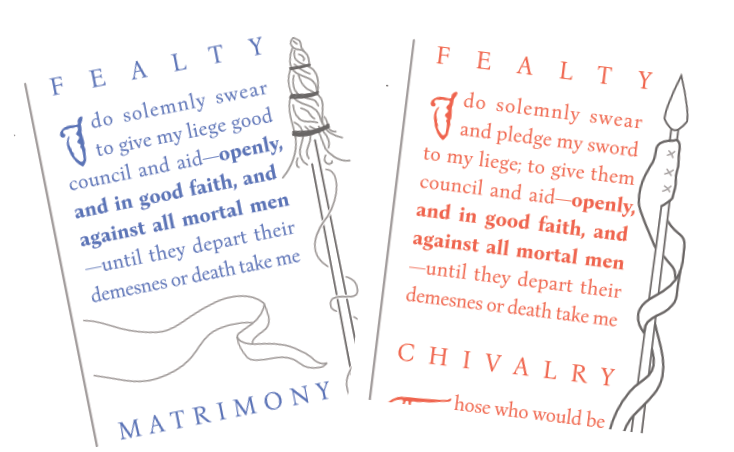
Asked to clarify the duties of fealty by the Duke of Aquitaine in 1020, Bishop Fulbert of Chartres explained it as thus:
He who swears fealty to his lord ought always to have these six things in memory; what is harmless, safe, honorable, useful, easy, practicable. Harmless, that is to say that he should not be injurious to his lord in his body; safe, that he should not be injurious to him in his secrets or in the defences through which he is able to be secure; honorable, that he should not be injurious to him in his justice or in other matters that pertain to his honor; useful, that he should not be injurious to him in his possessions; easy or practicable, that that good which his lord is able to do easily, he make not difficult, nor that which is practicable he make impossible to him.
However, that the faithful vassal should avoid these injuries is proper, but not for this does he deserve his holding; for it is not sufficient to abstain from evil, unless what is good is done also. It remains, therefore, that in the same six things mentioned above he should faithfully counsel and aid his lord, if he wishes to be looked upon as worthy of his benefice and to be safe concerning the fealty which he has sworn.
The lord also ought to act toward his faithful vassal reciprocally in all these things. And if he does not do this he will be justly considered guilty of bad faith, just as the former, if he should be detected in the avoidance of or the doing of or the consenting to them, would be perfidious and perjured.