There are three estates, of this,
Oh lords, you may be certain.
Knighthood and priesthood
And then the order of marriage.Jean de Condé, Li dis des trois estas dou monde
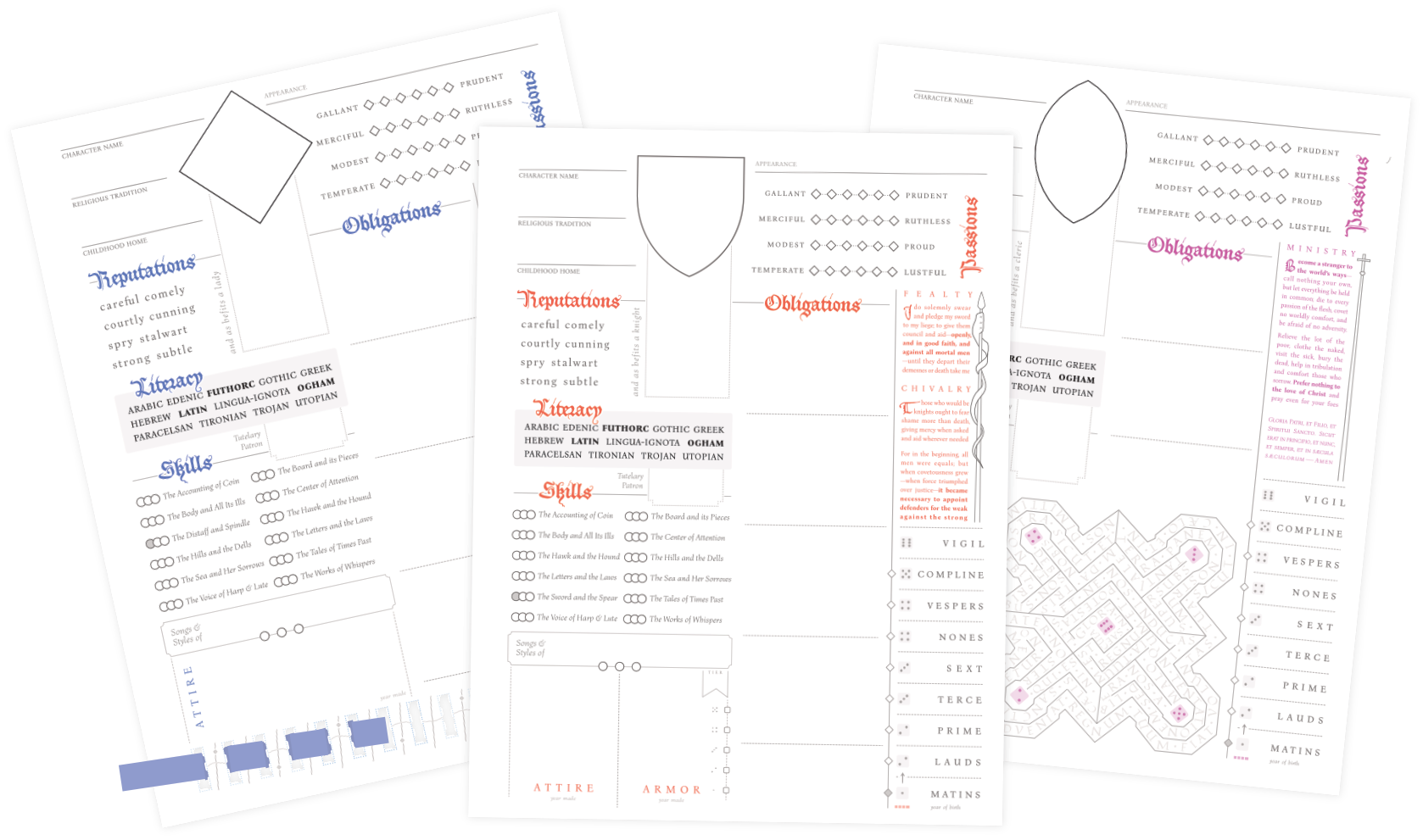
What’s the Difference?
WIP social expectations on class both vertical (a lady is not the same as a peasant woman, a knight is not just a fighting man) and horizontal (the "three genders")
What’s the Difference (in the rules)?
- Each has a special mechanic or rule only they interact with (Armor, The Loom and The Labyrinth)
- Each have different sets of Skills and fixed Obligations.
- (probably some small differences in character creation too, and obviously narrative differences may influences choices for other obligations, reputations, etc. - but don’t necessarily bind them)
Those Who Fight
His mother took him in her arms and said: “I commend you to God, dear son, for I’m deeply afraid for you. I do believe you’ve seen the angels who cause people such grief, killing whoever they come across.”
Chrétien of Troyes, Perceval
This is a Game About Knights and this is the “default”. Arthurian stories are mostly about knights. Armor is strong and important in many situations. Players should generally at least have one ready to play at any time, even if not their main character, but I don’t want to require that as strictly as it may have been in Pendragon (even though that game did have, in supplements, alternative rules).
I do worry I may make the other social classes’ special rules too exciting in contrast to Armor, which is a lot less gimmicky.
Those Who Work1
People are easily dazzled by Round Tables and feats of arms. You read of Lancelot in some noble achievement, and, when he comes home to his mistress, you feel resentment at her because she cuts across the achievement, or spoils it. Yet Guenever could not search for the Grail. She could not vanish into the English forest for a year’s adventure with the spear. It was her part to sit at home, though passionate, though real and hungry in her fierce and tender heart.
T. H. White, The Once and Future King
Ladies are also an important part of the gentry system, and involved in a lot of important work. Not just the direct textile-work (which is a big deal), but the maintenance and weaving together of influence and “fama”.
Those Who Pray
Perhaps the most idiosyncratic of the roles the near-gentry can take, the clergy are technically not gentry. The rich have given up their families and positions of power to serve God… but the ties are still there, at least in connections that can keep them in the orbits of their gentry relations.